
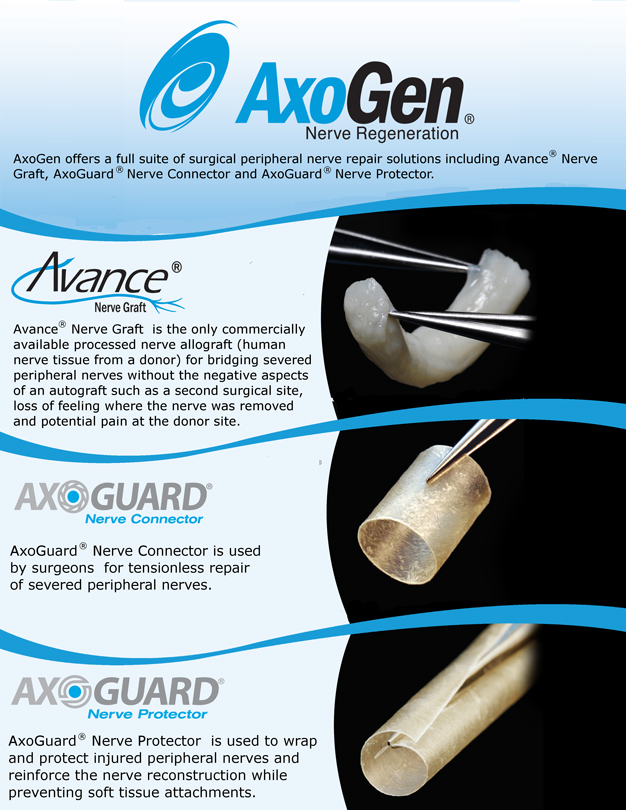
The U.S. Food and Drug Administration has granted formal approval to Axogen’s Avance Nerve Graft, a move that secures up to 12 years of potential market exclusivity for the company in the United States.
The Avance Nerve Graft, a processed human tissue–based product, is designed to repair damaged peripheral nerves without requiring a second surgical procedure to harvest a patient’s own nerve tissue. By eliminating the need for autografts, the technology aims to reduce surgical complications, postoperative pain, and recovery time.
Axogen said commercial sales of the licensed Avance product are expected to begin in the early second quarter of 2026. Until then, the product will continue to be available under the existing tissue framework.
The graft uses donor nerve tissue that is decellularized while maintaining the natural extracellular structure essential for nerve regeneration—an approach that distinguishes it from conventional nerve repair techniques. Previously regulated as donated human tissue, Avance will now be approved for treating sensory nerve discontinuities in both adults and pediatric patients one month and older.
“This approval represents a meaningful shift from our historical classification as a human tissue product and brings the product in line with the FDA’s classification of Avance as a biologic,” said Axogen CEO Michael Dale.
Analysts note that FDA approval not only positions Avance for extended market exclusivity but could also support broader insurance coverage, potentially accelerating adoption among surgeons treating peripheral nerve injuries.
“Avance can bridge gaps in damaged nerves and support nerve function restoration,” said Vinay Prasad, chief medical and scientific officer and director at the FDA’s Center for Biologics Evaluation and Research.
Current alternatives, such as autografts, require harvesting healthy nerve tissue from another part of the patient’s body—an approach associated with additional pain, donor site complications, and longer recovery times.
Peripheral nerve injuries occur when nerves outside the brain and spinal cord are damaged, disrupting communication between the central nervous system and the rest of the body. Symptoms may include pain, numbness, weakness, or loss of function in the affected areas.