
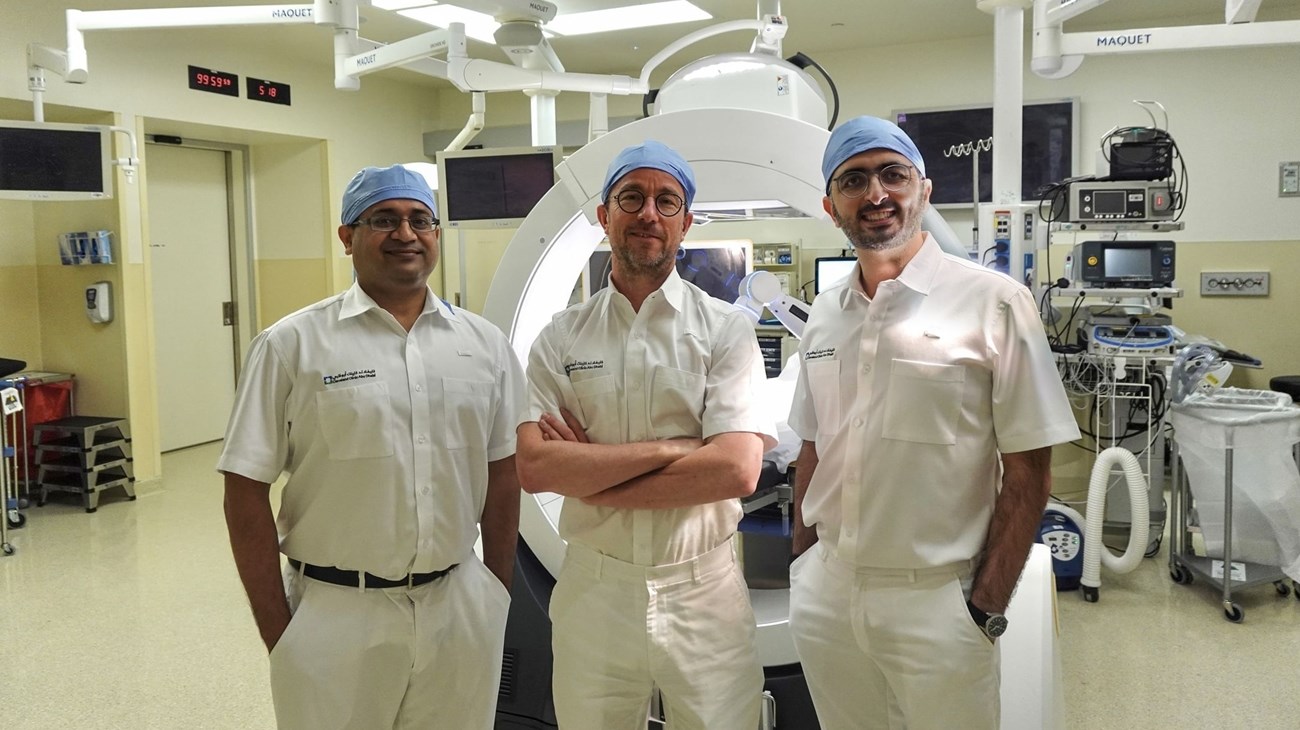
Cleveland Clinic Abu Dhabi has become the first hospital in the Gulf region to introduce Laser Interstitial Thermal Therapy (LITT) for the treatment of epilepsy and certain brain tumours, marking a major advancement in minimally invasive neurological care across the UAE and the wider Middle East.
The launch of the LITT programme positions the hospital at the forefront of advanced epilepsy and brain care by expanding access to cutting-edge surgical treatment options for patients suffering from complex neurological conditions.
LITT is an MRI-guided, minimally invasive surgical procedure designed for carefully selected patients with focal epilepsy whose seizures persist despite medication. The innovative therapy uses a highly targeted laser probe to precisely treat seizure-causing brain tissue while minimising disruption to surrounding healthy areas.
Unlike conventional open brain surgery, the procedure requires only a small burr hole instead of a large surgical opening, helping preserve scalp tissue and most of the patient’s hair. During the procedure, surgeons insert a laser probe into the targeted region of the brain under MRI guidance, enabling highly accurate ablation of abnormal tissue.
The minimally invasive nature of LITT is designed to reduce surgical exposure, minimise tissue disruption, and support faster recovery times, with most patients discharged within one to two days following treatment.
Chief Executive Officer of Cleveland Clinic Abu Dhabi, Dr. Georges-Pascal Haber, said the launch of the Gulf region’s first LITT programme for epilepsy reflects the hospital’s commitment to bringing transformative technologies and highly specialised care to the region.
“As healthcare continues to move toward greater precision and minimally invasive approaches, innovations such as LITT are redefining what is possible for patients with complex neurological conditions,” he said.
At Cleveland Clinic Abu Dhabi, LITT procedures are performed using advanced surgical robotics and state-of-the-art navigation software, enhancing the precision of laser probe placement and helping reduce surgical risks and complications.
Dr. Florian Roser, Chief Medical Officer and Chair of Neurosurgery at the hospital, said the introduction of LITT enables physicians to target complex areas of the brain with remarkable precision while reducing the physical impact of surgery on patients.
“Bringing this capability to the region represents an important advancement for epilepsy care and the future of minimally invasive brain surgery,” he added.
Clinical studies have demonstrated that LITT can achieve seizure reduction outcomes comparable to traditional resective surgery in selected patients, while potentially lowering surgical risk, shortening hospital stays, and enabling quicker recovery.
Dr. Mohamad Ayman Haykal, Staff Physician in Neurology at the Neurological Institute of Cleveland Clinic Abu Dhabi, said the technology significantly enhances patient experience through its combination of precision, minimally invasive access, and advanced imaging capabilities.
“For carefully selected patients, this approach offers meaningful seizure control with less surgical disruption and a much faster recovery compared to traditional techniques,” he said.