
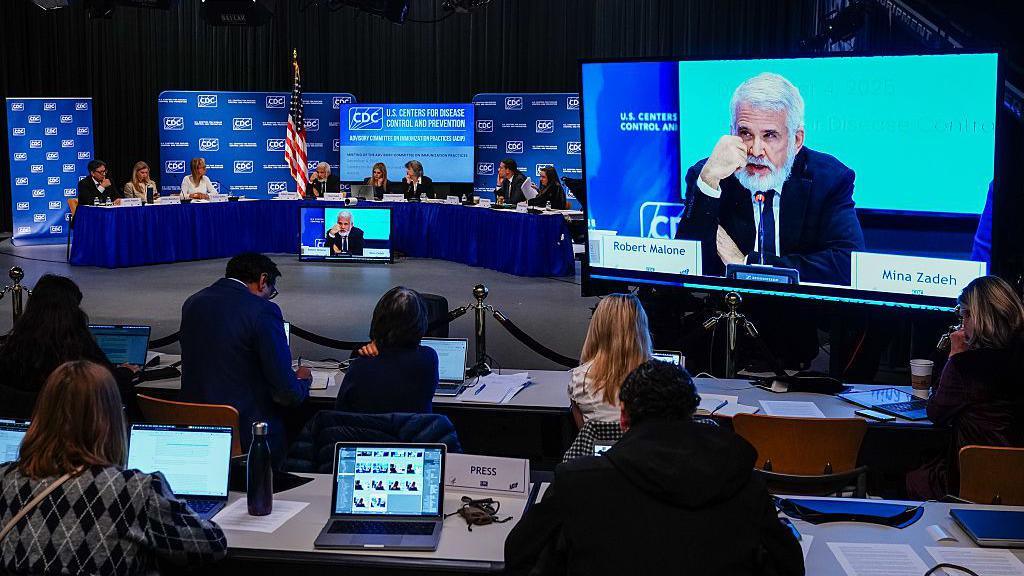
Vaccine manufacturers and public health experts are voicing strong concern after a U.S. advisory panel voted to end its long-standing recommendation that all newborns receive a hepatitis B vaccine at birth — a policy shift critics warn could erode decades of progress in preventing the virus.
Merck, maker of the widely used Recombivax HB vaccine, said it is “deeply concerned” by the CDC Advisory Committee on Immunization Practices (ACIP) decision, arguing that the change “puts infants at unnecessary risk of chronic infection, liver cancer and even death.”
According to the company, the universal newborn dose — in place since 1991 — has led to a 99% drop in acute hepatitis B cases among children and young adults. Infectious disease specialists and national medical organizations representing paediatricians, pharmacists and public health professionals also condemned the panel’s shift, noting there is no evidence that delaying vaccination provides any benefit.
Hepatitis B can be transmitted during childbirth and is linked to severe liver disease, early mortality, and lifelong health complications. The National Foundation for Infectious Diseases estimates the universal birth-dose policy has prevented over 500,000 childhood infections, cut infant cases by 95%, and averted more than 90,000 deaths.
Concerns About Influence and Safety Data Debate
Several ACIP members — appointed by U.S. Health and Human Services Secretary Robert F. Kennedy Jr., a long-time vaccine skeptic — questioned existing safety data and argued that U.S. vaccination practices differ from countries with lower hepatitis B prevalence, such as Denmark.
Industry Reaction and Market Response
GSK, which manufactures Engerix-B, reaffirmed its confidence in the science supporting its vaccine and said it will review the CDC’s final recommendation once formally adopted. Engerix-B has been approved since 1989, with 1.4 billion doses administered worldwide.
Following the vote, shares of Merck and GSK slipped about 1%, while U.S.-listed shares of Sanofi, another producer of hepatitis B vaccines, rose approximately 0.7%.
New Guidance Places Decisions on Parents and Providers
Under the revised recommendation, only infants born to mothers who test positive for hepatitis B should automatically receive the birth dose. Parents of infants with hepatitis B-negative mothers are now advised to consult their healthcare providers on whether and when to begin the vaccine series.
Merck has urged the committee to reinstate liaison organizations and frontline clinicians into its work groups, emphasizing that guidance must be grounded in expert-driven, evidence-based decision-making to protect public health.