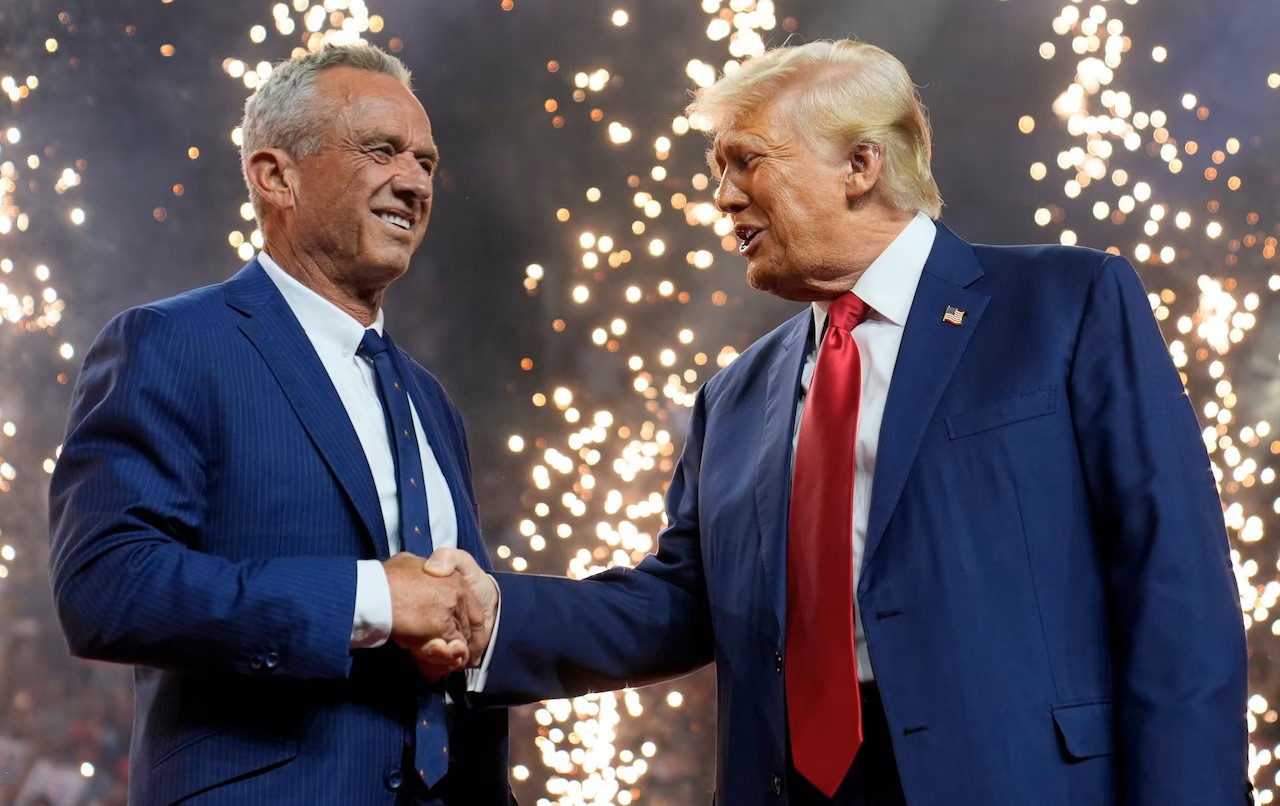
President-elect Donald Trump has announced his intention to appoint Robert F. Kennedy Jr. as Secretary of the U.S. Department of Health and Human Services (HHS), a move shared Thursday on his Truth Social platform. The appointment, which requires Senate confirmation, marks a pivotal choice for a key position in Trump’s Cabinet.
Calling the role essential to the health and safety of Americans, Trump expressed confidence in Kennedy’s ability to foster scientific innovation, increase transparency, and address the chronic disease epidemic.
“The safety and health of all Americans is the most important role of any administration, and HHS will play a big role in helping ensure that everybody will be protected from harmful chemicals, pollutants, pesticides, pharmaceutical products, and food additives that have contributed to the overwhelming health crisis in this country,” Trump posted. “Mr. Kennedy will restore these agencies to the traditions of gold-standard scientific research and beacons of transparency to end the chronic disease epidemic and to make America great and healthy again!”
Kennedy, a former Independent presidential candidate, ended his campaign in August to endorse Trump, fueling speculation about his potential role in the administration. His nomination to lead HHS surprised some experts who had anticipated an FDA commissioner role, given his controversial views on vaccine efficacy.
The Scope of Kennedy’s Role
If confirmed, Kennedy would oversee sweeping health policy initiatives across federal agencies, including the FDA, the Centers for Disease Control and Prevention (CDC), the Centers for Medicare & Medicaid Services (CMS), and The National Institutes of Health (NIH). Trump’s plans to reduce government inefficiencies could significantly reshape HHS under Kennedy’s leadership.
Criticism of Kennedy’s Appointment
The nomination has sparked heated debate. Senate Finance Committee Chair Ron Wyden (D-Ore.) sharply criticized Trump’s healthcare agenda and Kennedy’s qualifications.
“Trump’s health agenda isn’t a secret: worse healthcare at a higher cost for American families,” Wyden said. “Mr. Kennedy’s outlandish views on basic scientific facts are disturbing and should worry all parents who expect schools and other public spaces to be safe for their children.”
Wyden pledged rigorous scrutiny during Kennedy’s Senate confirmation process.
Hugh Taylor, M.D., president of the Massachusetts Medical Society, echoed concerns, emphasizing the need for a science-driven leader at HHS.
“The American healthcare system needs a leader who upholds and builds upon the trusted reputation of government health agencies whose decades of work have saved millions of lives. Mr. Kennedy falls alarmingly short of these critical qualifications,” Taylor stated.
Taylor urged a nonpartisan and thorough vetting process to ensure the nomination aligns with public health interests.
Looking Ahead
Kennedy’s confirmation hearing will likely ignite a contentious debate over the future direction of U.S. health policy under the Trump administration. The outcome may set the tone for how healthcare challenges, from chronic diseases to misinformation, are addressed in the years ahead.