
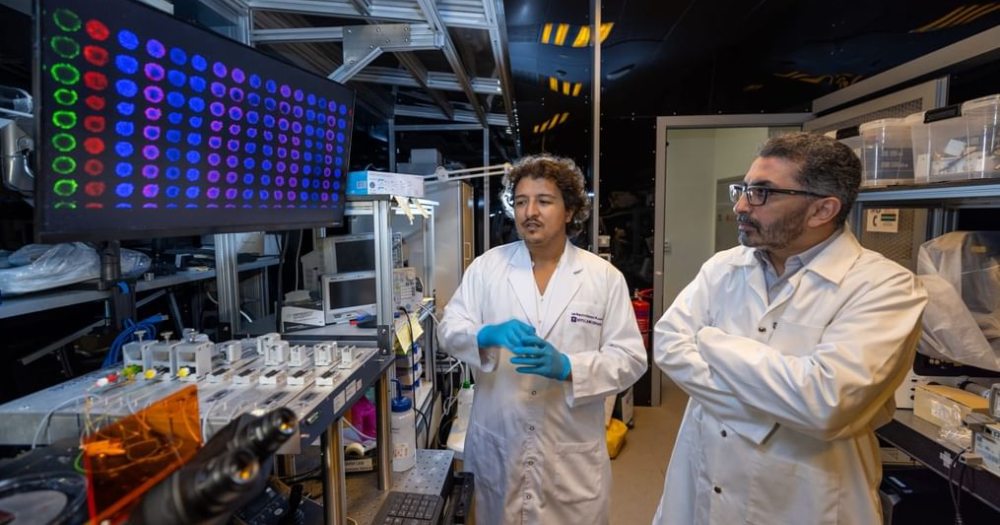
In cancer research, innovation is often constrained by the tools designed to advance it. When those tools are expensive, complex, or difficult to maintain, progress slows. Researchers at NYU Abu Dhabi have introduced a solution that could remove a long-standing barrier. Their new platform, Spheromatrix, offers a low-cost and remarkably simple method to grow, store, and reuse tumor models that more closely resemble real human cancers.
“Spheromatrix represents an important step forward in cancer research,” said Associate Professor Mohammad Qasaimeh. It is a step many in the field may see as overdue.
How Spheromatrix Works
At the core of Spheromatrix is something deceptively simple: an engineered piece of filter paper. While it may appear mundane, the paper is micro-patterned with precision to house tumor spheroids in a stable, reproducible manner.
Key capabilities include:
Biomimetic growth conditions: The paper structure creates a nurturing microenvironment that helps tumor models behave more like actual cancers.
Freeze-and-reuse functionality: Researchers can freeze the spheroids without damaging them, allowing long-term storage.
Consistent performance: Thawed models can be reused reliably, improving reproducibility across experiments.
Scalable and affordable: Production requires minimal resources, lowering research costs.
“Our goal was to design a platform that is simple, reliable, and affordable,” said Postdoctoral Associate Ayoub Glia. Early evaluations show Spheromatrix can preserve tumor responsiveness to chemotherapy drugs, creating what is essentially a living, low-cost library of tumor samples.
Its Importance
Spheromatrix has the potential to become a foundational tool in cancer research:
Enables biobanking: Scientists can build extensive tumor model libraries instead of starting from scratch with each study.
Cuts costs and time: Faster model preparation accelerates drug testing workflows.
Reduces animal testing: Dependable in-vitro models can reduce reliance on animal studies.
Supports personalized medicine: When paired with real patient samples, the platform could help researchers rapidly test which therapies are most likely to work.
By streamlining drug-screening workflows, Spheromatrix could shorten the path between discovery and clinical application—a shift with meaningful implications for patient care.
The Context Behind the Innovation
Developed at NYUAD’s Advanced Microfluidics and Microdevices Laboratory, led by Qasaimeh with Glia as first author, the research addresses a critical bottleneck in cancer drug development. Conventional tumor models are costly, difficult to maintain, and cannot be preserved long term—issues that hinder reproducibility and scalability.
Spheromatrix offers an elegant alternative. By transforming simple paper into a robust, freeze-friendly platform, the team has created a tool that aligns with modern research needs: reproducible, accessible, and efficient.
As cancer research increasingly leans toward personalization and rapid testing, solutions like Spheromatrix could play a central role in reshaping how therapies are discovered and validated.